
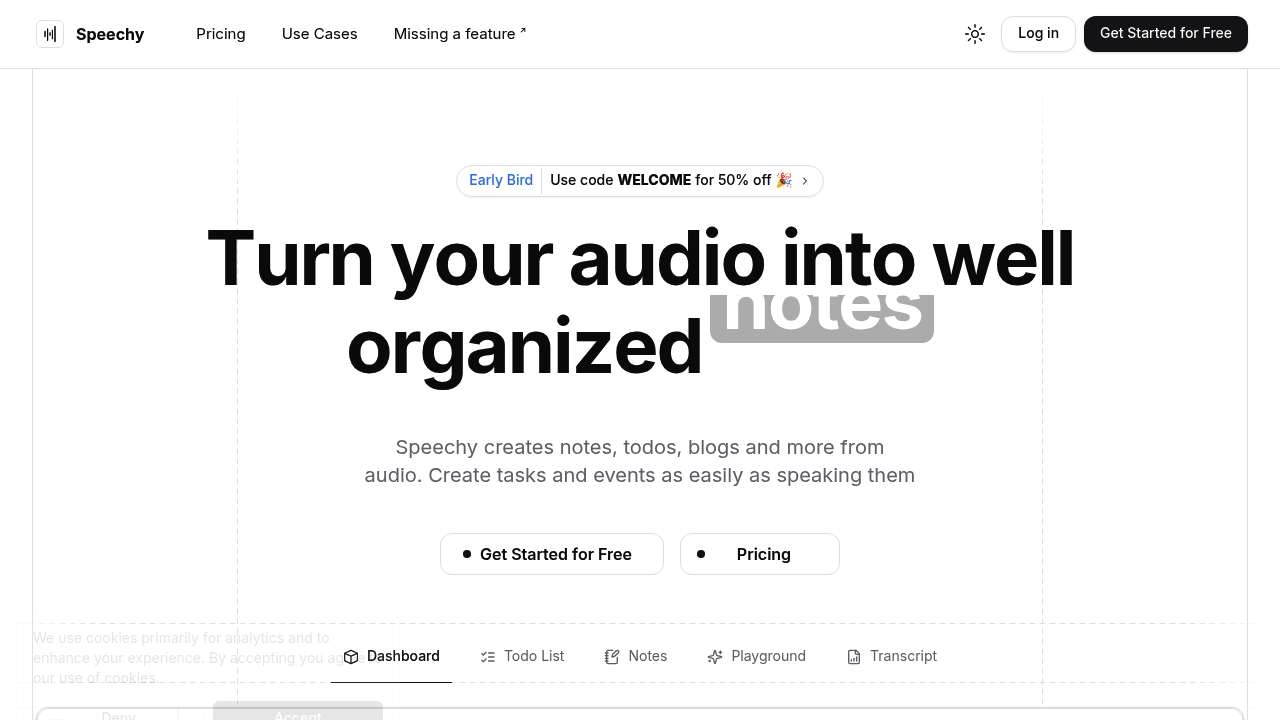
This application processes spoken audio through AI transcription to generate structured written content. Users can record directly, upload audio files in formats like M4a, Mp3, Ogg, and Wav, or pull content from YouTube videos. The system transcribes the audio using AssemblyAI's speech recognition technology, then applies analysis to transform raw transcripts into specific output formats.
The data pipeline starts with audio input. Voice memos work. So do uploaded recordings. The transcription engine processes audio in over 100 languages, converting speech to text. After transcription, the AI layer analyzes the content to identify action items, key points, and structural elements. This analysis determines what becomes a task, what becomes a note, and what needs organizing into calendar events.
Output formats number over 15 distinct types. The system can generate blog posts, newsletters, social media posts for different platforms, podcast scripts, video scripts, meeting minutes, and flashcards. It'll extract todos from conversations. It'll create journal entries from voice notes. The same audio input can produce multiple formats, so a recorded meeting might become both meeting minutes and a list of action items.
The transcription quality depends on audio clarity and language. Supporting 100+ languages means global accessibility, but accuracy varies by accent, background noise, and recording quality. The AI analysis works best with structured speech rather than rambling or fragmented thoughts. Meetings with clear agendas produce better organized outputs than casual conversations.
Storage happens within the system. Users can organize notes after creation, though specifics around folder structures or tagging systems aren't detailed. The system maintains unlimited storage for notes, todos, and journals according to the subscription model. This means users won't hit caps on how much content they can generate or archive.
Integration with YouTube lets users process existing video content without downloading files. The application pulls audio from YouTube URLs and processes it through the same transcription pipeline. AssemblyAI handles the speech-to-text conversion, which means Speechy's accuracy reflects that service's capabilities and limitations. There's no mention of API access for developers wanting to integrate Speechy into their own applications.
The company operates as a Stripe Climate Partner, directing a portion of revenue toward carbon removal projects. This doesn't affect functionality but indicates environmental considerations in their business model.
Pricing runs $19 monthly or $99 for lifetime access. There's a promotional code, WELCOME, that cuts these to $9 monthly or $49 lifetime. The monthly plan includes unlimited note generation, unlimited recordings and uploads, unlimited transcription, and support for all 100+ languages. Both plans include 24/7 support and priority access to new features. The lifetime deal adds permanent updates without ongoing subscription costs.
No free tier exists. Users must purchase access before testing the service. Users need to commit to paid access from the start.
Technical constraints aren't explicitly listed, but the architecture suggests some inherent limits. Real-time processing depends on audio length and server load. Complex audio with multiple speakers might confuse the transcription engine. The AI's ability to generate coherent long-form content like blog posts relies on the input audio containing sufficient structure and detail. Garbage in, garbage out applies. Speechy won't make a rambling voice note into a polished article without substantial source material.