
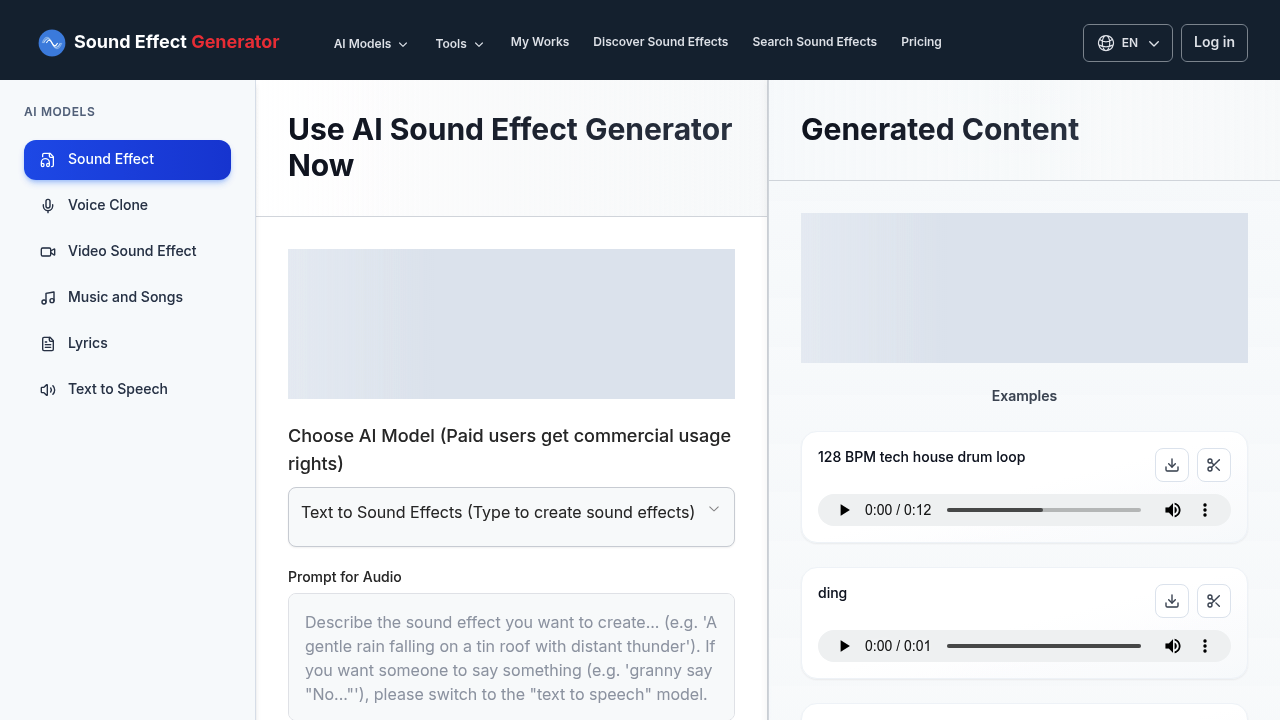
Type a description and get a custom sound effect in seconds. Sound Effect Generator turns text into audio clips ranging from half a second to 22 seconds long. Default length sits at 3 seconds. You can toggle a loop option if you need the sound to repeat without gaps.
The core feature works fast. Type "creaking door" or "sci-fi laser blast" and the AI interprets your prompt into an audio file. There's also a prompt generator if you're stuck on how to describe what you need. The search library lets you browse what others have created, though the free tier doesn't let you keep your generations private.
Does it actually sound good? This software promises high quality output and instant generation. Paid users get commercial usage rights, which matters if you're building games, videos, or apps. Free users face ads and can't use their sounds commercially. That's a real limit if you're planning anything beyond personal projects.
Beyond basic sound effects, this service bundles in voice cloning, video sound effects, music generation, lyrics creation, and text to speech. That's a lot of AI models under one roof. Whether you need all of them depends on your workflow. If you only want occasional sound effects, you're paying for features you might ignore.
The 22-second maximum feels short. Background ambience or longer musical elements won't fit. You'd need to generate multiple clips and stitch them together. For quick hits and short effects, it's fine. For anything extended, you'll bump into that ceiling fast.
Credits confuse things a bit. The free plan has a daily limit but doesn't specify how many credits that means. The $9.99 monthly plan gives you 5000 credits. The $19.99 tier offers 10000 plus a 1000 credit bonus. At $29.99 you get 20000 plus 2000 extra. How many credits does one sound effect cost? The facts don't say. That makes it hard to estimate how far your subscription stretches.
Annual subscriptions save 30 percent, but you're committing upfront without knowing your actual usage. If you generate three sounds a week, maybe the free tier covers you. If you're churning out dozens daily, you'll need a paid plan. The credit system needs more transparency.
Who gets the most value here? Game developers prototyping quickly. Content creators who need specific effects their libraries don't have. Sound designers experimenting with unusual requests. The text to speech and music features might appeal to YouTube creators or podcasters who want everything in one subscription.
Limitations hit free users hardest. No commercial rights means you can't monetize anything using these sounds. Ads interrupt the workflow. Your generations aren't private, so anyone can find them in the library. For hobbyists, that's acceptable. For professionals, the $9.99 entry point removes those friction points.
This software does one thing well: speed. Traditional sound design takes longer. Recording foley takes equipment and space. Digging through stock libraries eats time. Type, generate, download. That workflow has real appeal when you need something fast.
Just know you're buying into a credit system without clear consumption rates. The feature list looks long, but most users will tap two or three capabilities regularly. If instant sound effect generation from text solves a specific problem for you, the paid tiers make sense. If you're just curious, the free plan lets you test without commitment.