
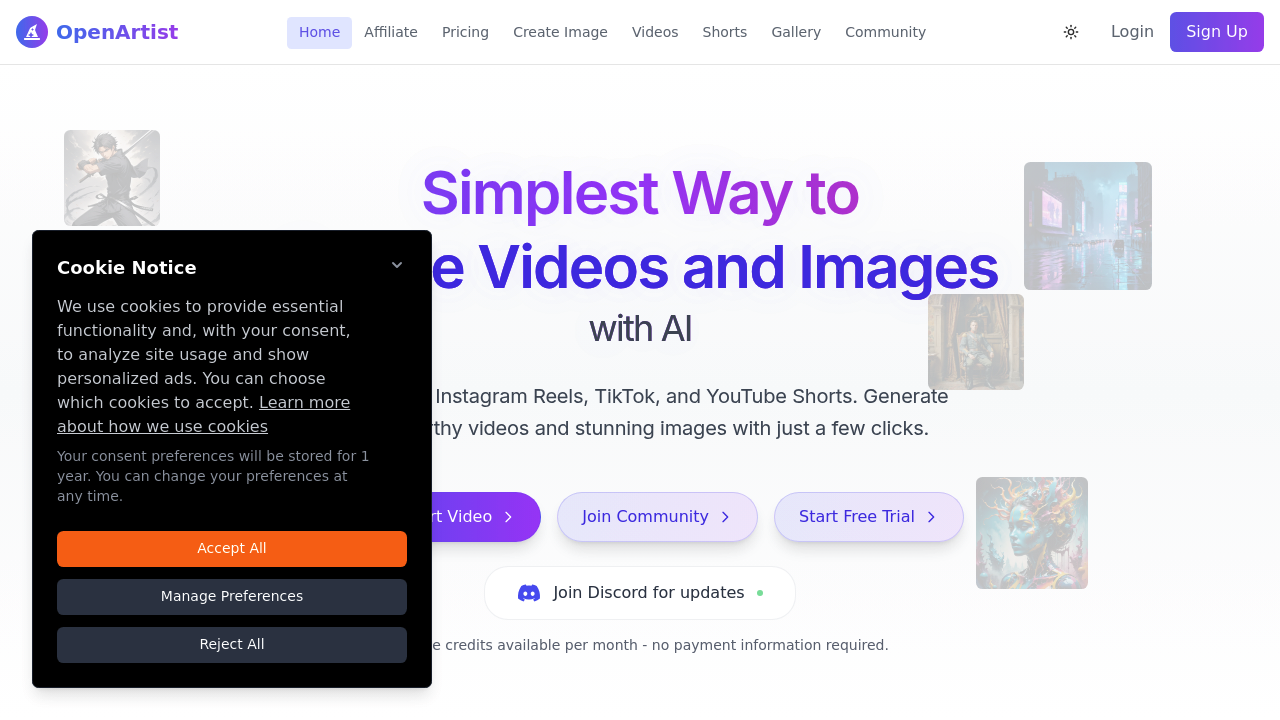
Social media creators get a tool built specifically for short-form video content. OpenArtist generates videos and images from text descriptions, handling Instagram Reels, TikTok clips, and YouTube Shorts without requiring prompt engineering expertise.
This AI-assisted guidance system removes the usual prompt complexity. Users describe what they want in plain language, and the system figures out the technical details. That's the pitch, anyway. Testing reveals whether this actually simplifies workflows or just shifts complexity elsewhere.
Text-to-video creation supports multiple generation lengths: 8, 12, 15, and 18 seconds. Videos render at 4K quality with natural human movements, professional lighting, and camera work that mimics cinema production. The system handles 9:16 aspect ratios natively for vertical video platforms. Ready time sits at 1-2 minutes per generation. Text-to-image works similarly, producing print-ready high-resolution output across multiple artistic styles.
Image-to-video transformation takes static images and adds motion. Background removal strips subjects cleanly. Batch processing handles multiple images simultaneously. Multiple aspect ratios accommodate different social platforms beyond just vertical video.
What's missing matters. No information exists around video length limits beyond the listed generation times. Can't determine maximum resolution for images. OpenArtist doesn't specify file format options or export settings. No details surface about content moderation, commercial usage rights, or whether generated content can be monetized on social platforms. These gaps create uncertainty for professional use.
The advanced scene understanding claim needs verification. Professional lighting and shadows sound impressive but require side-by-side comparisons with actual professionally lit footage. Natural human movements and expressions deserve scrutiny too. AI-generated humans often fall into uncanny valley territory or exhibit subtle motion artifacts that viewers notice.
Batch processing helps, but the facts don't reveal batch size limits. Processing time scales matter when creating content at volume. One image takes X time, but does ten images take 10X or benefit from parallel processing?
You get 50 free credits monthly without entering payment details. That's completely free, not a trial requiring a card. The credit-to-generation ratio isn't specified, so can't calculate how many videos or images those 50 credits produce. Makes planning difficult.
Content creators working exclusively in short-form video might find value here. The vertical video focus and social media optimization align with platform requirements. But anyone needing longer content, specific file formats, or commercial usage guarantees will hit walls fast. This software solves one specific problem well while leaving adjacent problems unaddressed.