
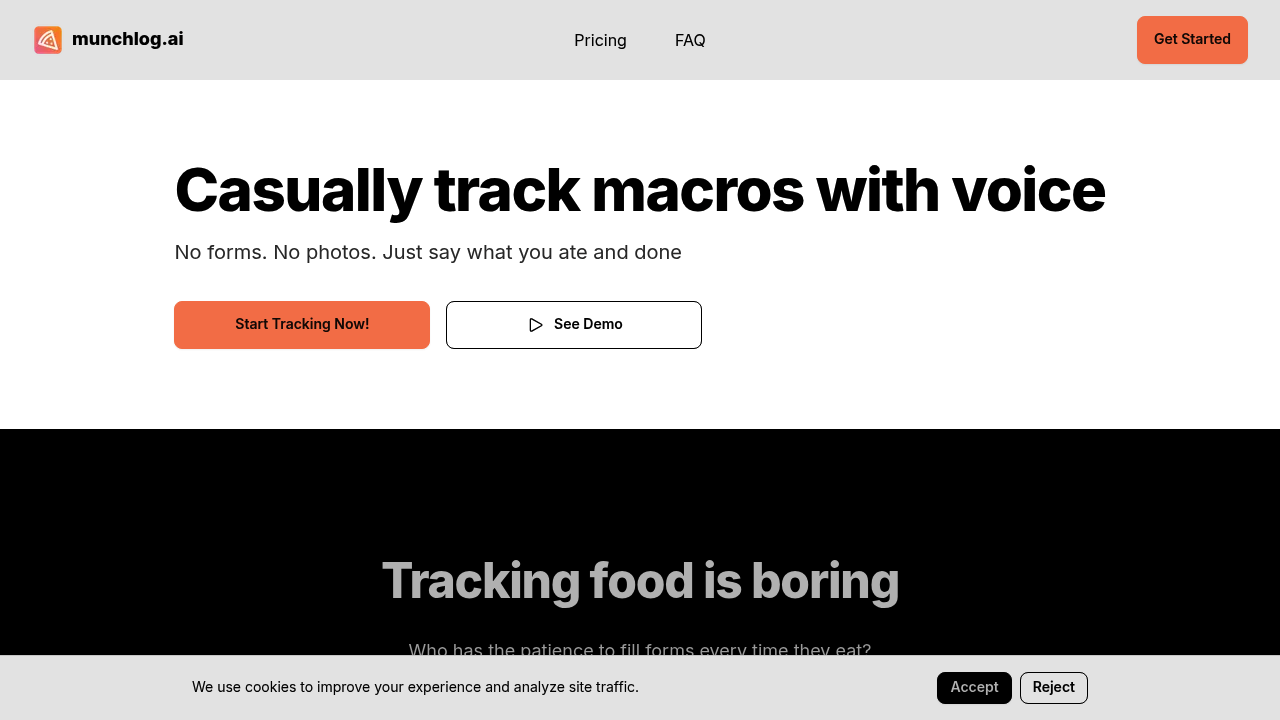
Speak what you ate into your phone. Get macro estimates back. That's the pitch.
The voice-first approach skips the usual food tracking grind. No scrolling through databases of branded products. No weighing portions on a kitchen scale. No photographing every meal. Just say "had a chicken burrito for lunch" and the AI generates calorie and macro breakdowns from its general nutrition knowledge. Log unlimited meals this way. Set daily macro targets if you want structure, or skip goals entirely if you're just curious about patterns.
What actually works here is the low-friction logging. Traditional food apps make you select "Chipotle Chicken Burrito Bowl - Regular" from a list of 47 similar items, then specify whether you got brown or white rice. This just listens and estimates. You can refine your last meal entry if the AI misunderstood what you said, though full editing across your history isn't available yet.
The accuracy question matters. Munchlog explicitly calls its numbers approximations, not medical-grade data. There's no food database cross-referencing actual nutritional labels. The AI uses general knowledge about what's typically in foods. A homemade lasagna gets estimated differently than a Stouffer's frozen one, but both are educated guesses. The app openly admits this limitation instead of pretending precision it can't deliver. If you need exact macros for bodybuilding prep or medical conditions, look elsewhere.
Data stays trapped inside for now. Can't export your tracking history to spreadsheets or other apps. No integrations with fitness platforms or health ecosystems. It's a standalone tool that doesn't play with others yet.
The target user finds MyFitnessPal exhausting but still wants macro awareness. Someone who'd rather have rough numbers than perfect data that requires 10 minutes per meal to log. The approach fits casual tracking, not competition prep or clinical nutrition monitoring.
Costs $49.99 per year. Seven-day free trial lets you test whether voice logging actually fits your habits before paying. No monthly option listed, just the annual plan.
The core trade-off is clear. Give up precision and control, gain speed and ease. If you've quit tracking macros three times because apps demanded too much effort, this might stick. If you need accurate counts for specific fitness or health goals, the approximation model won't cut it. The app knows what it is and doesn't pretend otherwise. That honesty about limitations might be its most useful feature.