
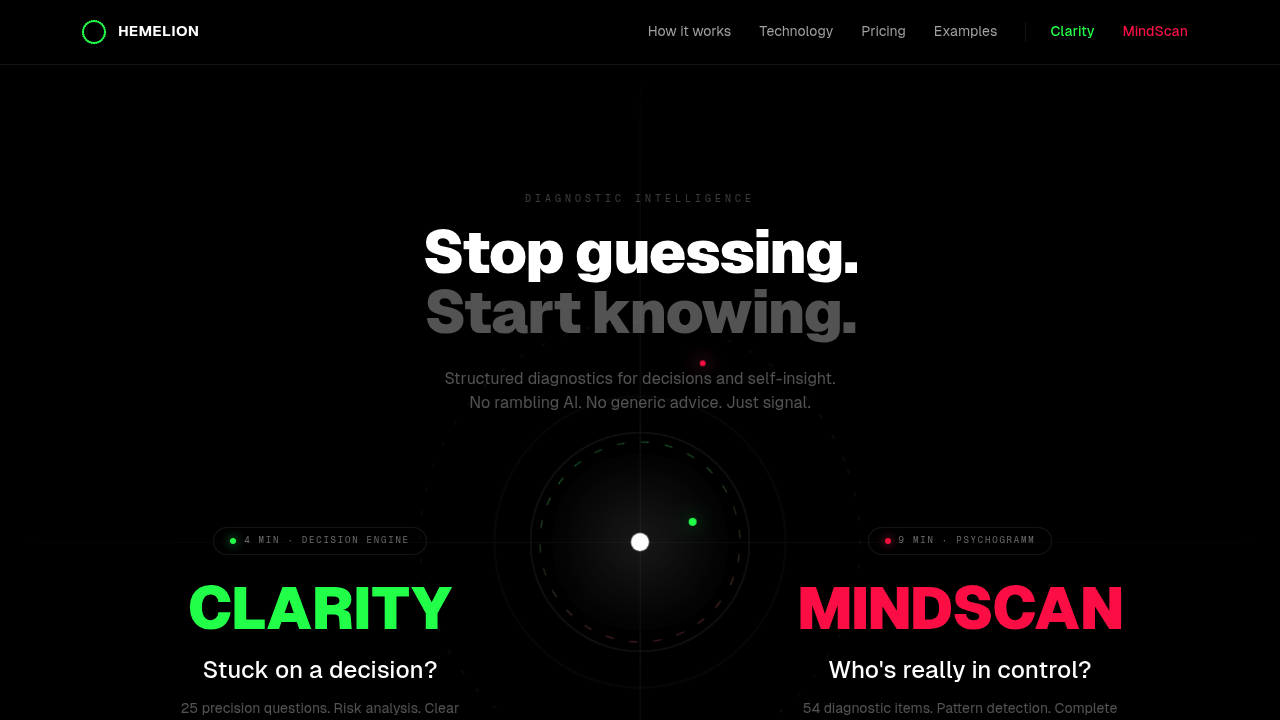
Two diagnostic modes power this intelligence system built around structured analysis rather than conversational AI. Clarity tackles decisions through 25 precision questions answered in 4 minutes. MindScan goes deeper with 54 diagnostic items spanning 18 psychological dimensions completed in 9 minutes. Both deliver reports generated through a three-engine architecture that separates mathematical computation from narrative creation.
The Scoring Engine runs deterministic algorithms first to calculate metrics from user responses. No AI involvement yet. Then the Contradiction Engine cross-validates answers using mirror pairs and consistency algorithms to spot where responses do not align. Only after these two mathematical passes does the Narrative Engine engage AI for a three-pass synthesis process that creates, critiques, then refines the text. This structure constrains what the AI can write to what the computed data supports.
Each scan presents one question per screen using sliders, taps, and forced choices. Progress saves automatically. No wandering through option lists or getting generic advice tailored to nobody. The system detects patterns, identifies blind spots, and generates risk analysis with confidence scoring. Clarity outputs include a 7-day action protocol. MindScan delivers a 14-day integration plan.
The architecture design matters because it inverts typical AI tool logic. Most systems let language models generate whatever sounds plausible then maybe check it afterward. This one computes mathematical scores and contradiction patterns first, establishing boundaries before any text generation happens. The Narrative Engine can't invent features or soften uncomfortable findings because the Scoring and Contradiction Engines already locked down what the data shows.
Each scan goes for $9.90 as a one-time payment made after completion. No subscription. No account creation required. You pay once, get your report, done. This model means no tracking of multiple scans over time or comparison between past results. Each diagnostic stands alone.
The system doesn't position itself as clinical assessment. It won't replace psychological evaluation or medical diagnosis. The target sits squarely on people facing difficult decisions who want structured analysis instead of exploratory conversation, or individuals seeking psychological profiling without chatbot back-and-forth. Someone choosing between job offers, relationship decisions, or major life changes gets forced recommendations rather than endless options. The contradiction detection highlights where their own thinking doesn't match up internally.
MindScan's 18 psychological dimensions get measured through the 54 diagnostic items, though the specific dimensions aren't detailed in available information. The precision questions in Clarity focus on decision parameters rather than personality traits. Both modes challenge assumptions rather than confirming what users already believe, according to the positioning against generic conversational tools.
The pay-per-scan model creates a clear limitation for anyone wanting ongoing psychological tracking or decision support across multiple situations. No team features exist. No API access. No integrations with other tools. Each diagnostic session stands as an isolated event. Someone working through extended therapy, long-term decision processes, or organizational applications would need to pay separately for each analysis without continuity between sessions.
The interface strips away complexity to one question at a time. This reduces cognitive load during assessment but also means no backtracking through previous answers or seeing the full question set upfront. The automatic saving prevents lost progress but the lack of account system means no historical record.