
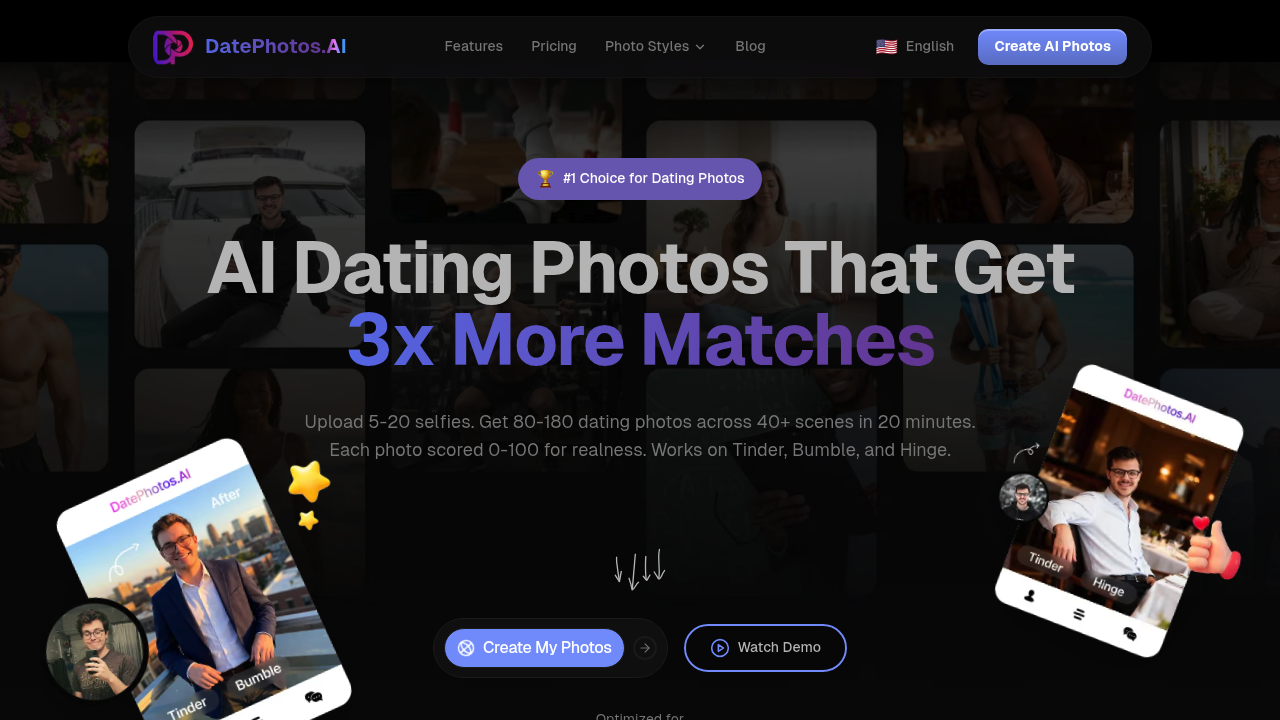
A sales consultant in Denver hates his dating app results. His bathroom mirror selfies and one friend's blurry iPhone shot from a barbecue aren't cutting it. He could hire a photographer for $300 and wait two weeks for 20 photos, all from the same session. Or he uploads 12 selfies to DatePhotos.AI and gets 150 dating photos across 40 different scenes in 25 minutes.
The service transforms regular selfies into professional-looking dating profile photos. Someone uploads between 5 and 20 photos of themselves. The AI generates 80 to 180 new photos placing that person in coffee shops, beaches, gyms, urban streets, and outdoor settings. Each scene comes in three different poses. The system adjusts lighting and angles automatically.
A graphic designer in Austin uploads 15 selfies and receives 140 photos within half an hour. She gets versions of herself at a rooftop bar, hiking trail, art gallery, and downtown street corner. The AI creates variety that would take multiple photography sessions to achieve. She sorts through the batch using the realness score that accompanies every photo. Most score above 85. The average hits 92 out of 100.
That scoring system matters. Not every AI-generated photo looks convincing. Some have weird hands or unnatural shadows. The numerical rating helps people identify which photos work. A marketing manager in Miami gets his photos back and filters by realness score first. He tosses anything below 80 and focuses on the 90+ rated images. He still ends up with 60 usable photos.
DatePhotos.AI optimizes photos specifically for Tinder, Bumble, and Hinge. Research from Photofeeler shows profiles with varied photos get 38% more matches. Someone stuck with selfies from the same apartment suddenly has beach shots, gym photos, and coffee shop settings. The service claims users get three times more matches.
If something doesn't look right, DatePhotos.AI includes 10 free regeneration chances per project. A teacher in Portland doesn't like how her hiking scene photos turned out. She regenerates that scene without paying extra.
DatePhotos.AI costs $29 to $79 depending on the package. That's $170 to $420 less than traditional photography. It's also 40 times faster than booking a photographer and waiting for edited results.
A freelance writer in Chicago needs photos but works irregular hours. Scheduling a photographer around his availability, finding good lighting conditions, and coordinating outfit changes would take weeks. He uploads selfies at 11 PM on a Tuesday and has dating photos by midnight.
The major limitation shows up in quality consistency. Following upload guidelines helps, but users still need to manually review which photos look realistic enough to actually use. Someone might get 130 photos but only feel comfortable posting 40 of them. That's still more variety than most people have.
People happy with their current dating photos don't need this. Someone who already invested in professional photography or naturally takes great photos won't benefit. The service targets people stuck with mediocre selfies who want better options without photographer costs and scheduling headaches.
It also includes a free photo analyzer for checking existing dating photos. Works fast. Saves money. calls for some manual filtering to separate the convincing from the questionable.