
A marketing director needs to draft social posts, generate campaign images, and brainstorm video concepts — but she's juggling subscriptions to three different AI platforms. She logs into one for writing, another for images, and a third for the latest model everyone's talking about. By midday, she's lost in browser tabs and wondering if there's a simpler way.
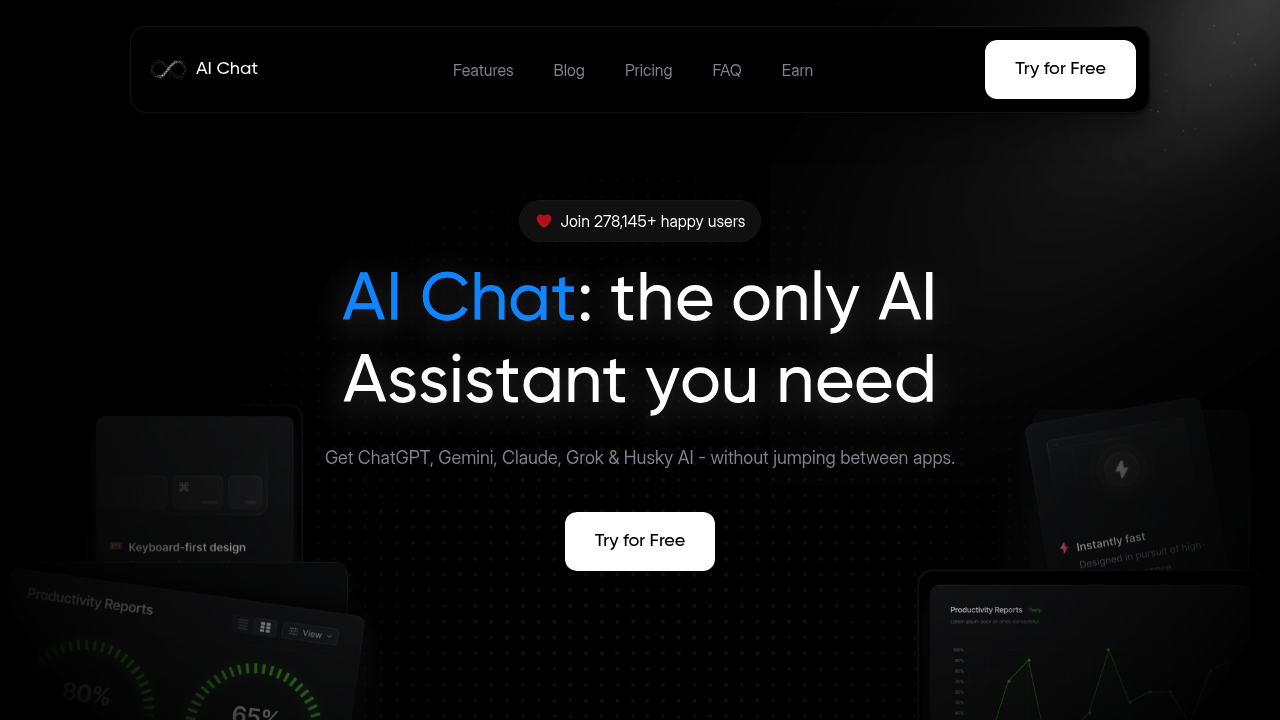
AI Chat consolidates six different AI models into one application. Instead of paying for separate subscriptions and switching between interfaces, users access everything from a single dashboard. Text generation, image creation, audio production, and video content all live in the same workspace. This service includes models people already know plus Husky AI, which pulls uncensored answers from across the web and Telegram channels. That marketing director writes her copy, generates visuals, and tests different approaches without changing applications.
A developer building a product feature wants quick answers about emerging frameworks. He's tired of censored responses that dodge technical questions. He turns to Husky AI within AI Chat, which searches the full web and Telegram developer channels for real-world implementations. The answers come back unfiltered, pulling from communities where developers actually discuss trade-offs and problems. He gets what he needs without the sanitized corporate speak.
AI Chat claims users save over $800 yearly compared to subscribing to each AI service separately. Individual subscriptions for similar models add up to over $100 monthly. AI Chat bundles them at $14.99 per month on sale, down from the regular $29.99. A seven-day trial lets people test whether consolidation actually works for their workflow. Over 278,000 users have signed up. There's also a free plan with access to all models, though specific limits aren't detailed.
A project coordinator managing a remote team creates custom AI assistants with memory and specific behaviors. One assistant handles meeting summaries with context from previous discussions. Another brainstorms solutions using the team's established frameworks. She shares these custom chats with colleagues through the collaboration features, and everyone accesses them from mobile devices between meetings. The setup works because AI Chat includes user management and team features alongside the AI models.
AI Chat positions itself as the first AI search engine boosted by Telegram and web content. That's a real differentiator for people who need information from communities and channels, not just scraped websites. Data security matters here — the service doesn't share or sell user information. Web3 integration lets anonymous content creation for users who want that layer of privacy.
Where it breaks: People deeply invested in one specific model's ecosystem won't find advantages here. If a team has built workflows around a particular AI's unique features, plugins, or integrations, switching to a unified service means losing those customizations. AI Chat integrates with Telegram and web content sources, but that's it. No mention of API access for developers building their own applications on top of these models.
A solo consultant who occasionally needs AI assistance might not justify even the discounted monthly cost. The free plan exists, but without knowing its limits, it's unclear if it'll cover light usage. Heavy enterprise teams with complex compliance requirements won't find details about security certifications or data residency options in the available information.
AI Chat makes sense for professionals juggling multiple AI subscriptions who want simplified billing and one login. It doesn't make sense for specialists who need deep integration with one service or teams requiring enterprise-grade compliance documentation.