
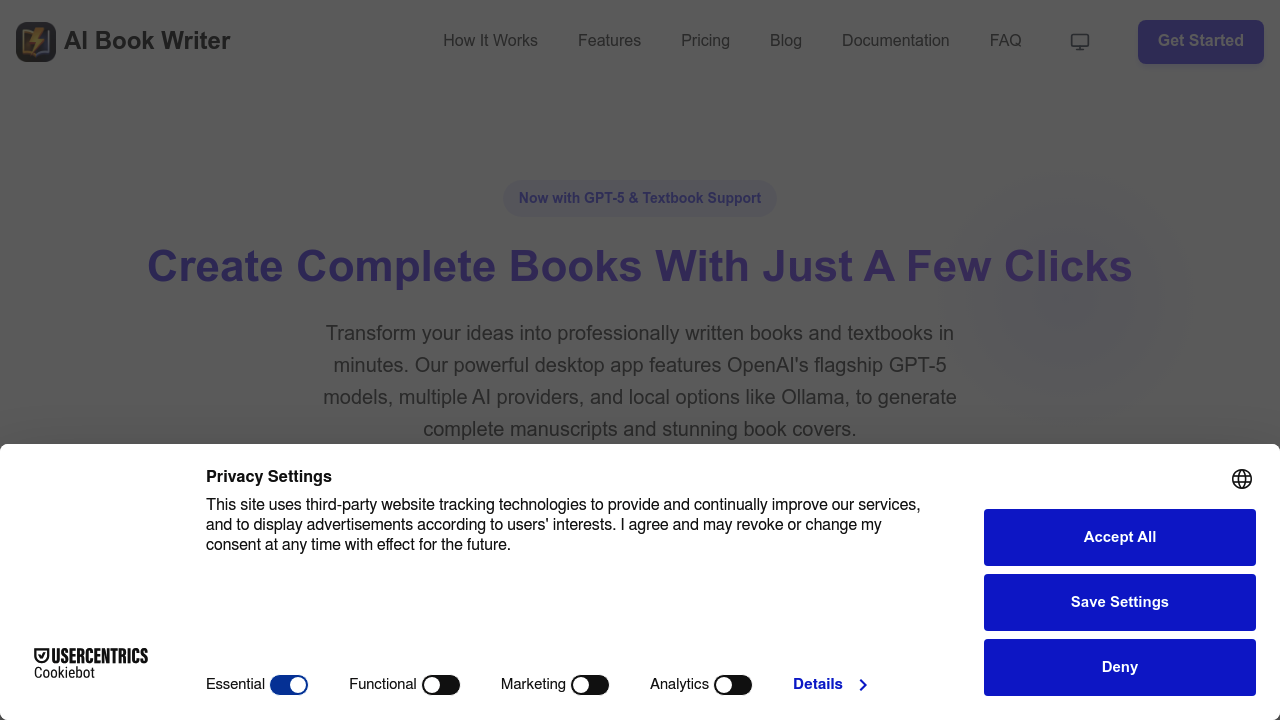
Desktop software that claims to spit out complete books in 10-30 minutes. That's the headline promise. You download the app, feed it an idea, and supposedly walk away with a manuscript and cover design ready for publication.
The tech stack runs deep. Multiple AI providers feed into one interface — everything from major commercial models to local options through Ollama and LM Studio. Context windows hit 400K tokens, which matters when you're building long-form content that needs to stay coherent across chapters. Dynamic routing switches between models based on what task you're running.
For fiction, it builds 5-act structures with character arcs baked in. You pick genre, narrative perspective, target chapter count, and rough word targets per chapter. The example configuration shows around 2,000 words per chapter. Non-fiction and textbook modes restructure this into learning objectives and chapter hierarchies instead of plot beats.
Cover generation pulls from DALL-E 3 or Ideogram 3.0. Files export at print-ready resolution. DOCX output follows industry formatting standards, at least according to the specs.
Real limitations hide in what isn't said. No mention of editing tools beyond basic chapter organization. You're generating content, not refining it. The preview feature exists but details on revision workflows don't appear anywhere. That 10-30 minute generation window means you're probably getting first-draft quality, not publication-ready prose.
Desktop-only design cuts both ways. No browser distractions, but also no mobile access or cloud sync mentioned. You're tied to wherever you installed the software.
The textbook angle is notable. Most book generation software chases fiction authors. Adding structured educational content with learning objectives targets a different market entirely — course creators, corporate training developers, educators building custom materials.
Character arc management gets listed as "advanced" but specifics don't surface. Same with "genre-optimized plot development." Marketing language without the mechanics underneath. What makes it advanced? What genres get optimized how? The facts don't say.
Multi-provider support deserves credit. You aren't locked into one AI vendor's pricing or rate limits. Switch between commercial APIs and local models depending on budget and privacy needs. That flexibility matters for anyone planning serious volume.
The core question: does speed equal quality? Thirty minutes from concept to complete manuscript sounds efficient. It also sounds like output that'll need substantial human editing before anyone should publish it. This software generates structure and fills pages. That's different from writing a book people want to read.